3x Funding NIH funding outcomes for PIs using BioRender
Top 3% Reported rankings among grant applicants
6x Faster Figure creation reduced from hours to minutes
The Challenge: Strong Science Alone Doesn't Always Secure Funding
Tulane researchers are working at the forefront of biomedical discovery, spanning immunology, neuroscience, cancer biology, and infectious disease. As a private R1 institution, Tulane ranks among the top 2% of universities nationwide for research activity, and in this competitive landscape, strong science alone isn’t always enough to secure funding.
NIH and other major grant reviewers evaluate hundreds of dense, technical submissions under tight deadlines, making clear and accurate scientific communication a significant competitive advantage.
Yet for many faculty labs, grant-ready visuals have traditionally been created using tools never designed for biology: PowerPoint shapes, hand-drawn sketches, or time-intensive workflows in Adobe Illustrator that still fail to capture the scientific nuance.
Researchers needed a scalable way to communicate complex science clearly and professionally without spending hours on every figure or compromising the scientific accuracy and clarity of their visuals.
The Solution: Tulane Made Stronger Visual Communication a Priority Institution-Wide
Rather than treating visual science communication as an afterthought, Tulane made scientific clarity a strategic priority. The university adopted BioRender institution-wide, ensuring that every scientist from PIs to trainees, had access to a purpose-built platform designed specifically for life science communication.
Today, BioRender is embedded across the institution with researchers in every department creating professional quality visuals to support their grants, publications, and cross-collaboration.
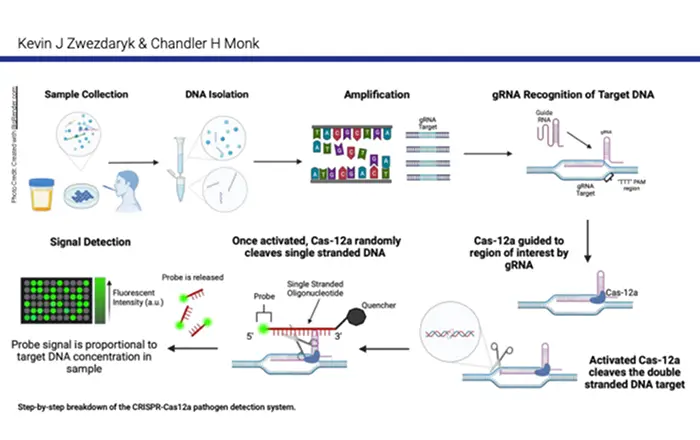
Tulane researchers use BioRender visuals in their high-stakes research communication including NIH and foundation grant submissions to make their visuals look polished and help reviewers understand complex science faster.
“In my experience as a grant reviewer, proposals that are easier to follow tend to earn stronger funding recommendations. Clear, polished visuals, like those created with BioRender, make that difference.”
Dr. Kevin Zwezdaryk, PhD Assistant Professor Microbiology & Immunology
With life science–specific icons, templates, and intuitive design tools, they can represent nuanced biological processes with both accuracy and clarity.
As Dr. Mykel Green, Assistant Professor of Biomedical Engineering, explains: “Our biology is very complex. With PowerPoint, it doesn't look realistic. Now, with science getting more complicated, having that level of detail from BioRender can help something even very minute be understood.”
By standardizing high-quality visual communication across labs, Tulane enabled every researcher to strengthen their grant narratives and ensure their science is understood as intended.
The Outcomes: Stronger Proposals, Faster Figure Creation, and 3x NIH Funding
Tulane’s investment in visual science communication produced measurable results. Researchers who incorporated BioRender visuals into NIH grant submissions during the time Tulane provided the sitewide license secured 3X the funding compared to proposals that did not use BioRender visuals.
These outcomes help demonstrate that clearer science communication is becoming a competitive advantage for researchers at the institutional level. With BioRender, that quality is now accessible to every scientist at Tulane. “Now, anyone can do that level of graphical abstract,” Zwezdaryk noted, “you see it in almost every grant now.”
“I value platforms that help reduce friction in the research process. BioRender helps support clearer scientific communication at Tulane, helping researchers create strong visuals efficiently for grants, collaboration, and research outputs.”
Stephen Oglesby Director of Technology Delivery
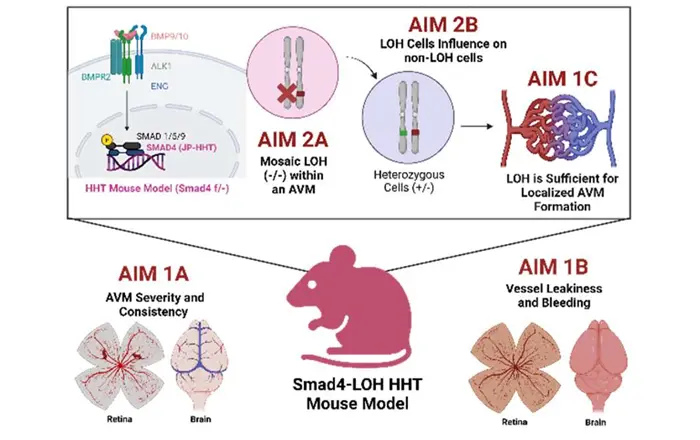
In multiple cases, Tulane researchers also ranked in the top percentage of applicants, reinforcing the role of clear communication in proposal competitiveness. PhD candidate, Adella Bartoletti, who studies rare vascular disease in the Cell and Molecular Biology department, used BioRender visuals in two recently funded grant applications, and the reviewer feedback pointed to a consistent theme.
“The reviewers were consistently saying the procedures make sense, they're well thought out, easy to understand,” Bartoletti noted. “Both applications were funded. For the NIH (NHLBI) grant, I was in the top 14% of applicants, and for the AHA grant, I was in the top 3%.”
Beyond increased funding outcomes, BioRender also notably accelerated the pace of research communication across the university. Research teams are now creating scientific figures up to 6X faster, allowing the researchers to invest that time saved in producing higher quality grants and publications.
Time savings is more than just a matter of convenience for researchers. It accelerates grant cycles, shortens manuscript preparation, and removes friction from collaboration. When a journal requests a last-minute graphical abstract, Bartoletti delivers it before the deadline with no revisions required. When a colleague describes an idea on a whiteboard, Dr. Green can translate it into a polished figure the same day to keep everyone on the same page.
Tulane‘s adoption of BioRender reflects a broader shift in how the university approaches research. By standardizing high-quality visual storytelling across its research community, Tulane transformed scientific communication from a time-consuming formatting task into a strategic advantage.
Featured Tulane Researchers
“It used to be that you'd send your visuals to the journal, and their team would put something together—they were the only ones that could do it. Now with BioRender, anyone can do that level of quality.”
Dr. Kevin Zwezdaryk, PhD Assistant Professor Microbiology & Immunology
“That initial perception really influences the outcomes of grants and publications. By having professional-looking BioRender images, I think people are more likely to listen to the rest of what you have to say.”
The 3x funding metric was derived from analysis of 307 NIH-funded projects at Tulane University during fiscal years 2022-2024. Data sourced from NIH RePORTER (official U.S. government grants database) and PubMed Central. Projects were classified as using BioRender if their associated publications cited BioRender visuals (verified via PMID). Funding was aggregated at the PI level, summing all projects for each researcher. PIs using BioRender (n=88) averaged $2.97M in total NIH funding vs. $904K for PIs not using BioRender (n=103), yielding a 3x ratio. All project numbers and verification details available upon request. This analysis demonstrates correlation between BioRender use and research funding; causation cannot be determined from observational data.
BioRender uses cookies to improve our user experience. By continuing to our site, you agree to our use of cookies outlined in our Privacy Policy.